As people spend increasing amounts of time indoors—whether at home, work, or school—the design and management of indoor environments have become crucial to supporting long-term health, comfort, and productivity. Researchers now understand that indoor spaces significantly influence human well-being, affecting everything from mental clarity to physical health. A critical factor in this relationship is air quality, which plays a direct role in respiration, concentration, and emotional regulation. Alongside air quality, lighting, noise levels, temperature, and ventilation contribute to how individuals think, work, and learn. When these environmental conditions fall short, they can negatively affect mood, alertness, and overall cognitive performance.
As organizations prioritize employee well-being and schools work to enhance learning outcomes, optimizing indoor conditions has emerged as a central strategy. Advances in building technology, smart sensors, and environmental design make it possible to monitor indoor spaces more precisely and adjust them based on real-time needs. These innovations help create healthier, more supportive environments where people can thrive.
This article explores how indoor environmental factors influence cognitive function, the science behind air quality and its health impacts, and the strategies organizations can implement to create optimal indoor environments that strengthen both cognitive and physical well-being.
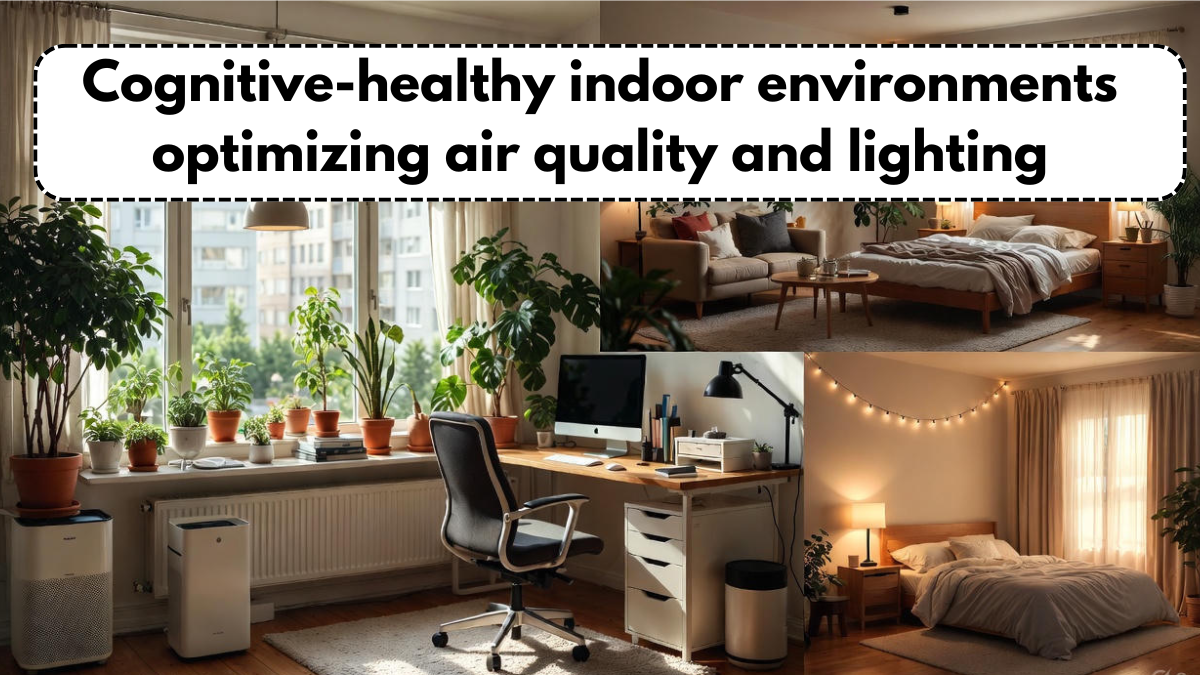
The Relationship Between Indoor Environments and Cognitive Performance
Decades of research demonstrate that indoor environments play a major role in shaping cognitive outcomes. Everything from temperature and humidity to lighting and sound levels can affect the brain’s ability to process information effectively. Among these factors, air quality is one of the most influential. Exposure to pollutants such as carbon dioxide (CO₂), volatile organic compounds (VOCs), particulate matter, and allergens has been shown to impair decision-making, reduce memory recall, and slow reaction times.
When indoor spaces are poorly ventilated, CO₂ levels rise quickly, especially in classrooms, offices, and meeting rooms where groups of people gather. Elevated CO₂ reduces oxygen availability, forcing the brain to work harder and diminishing cognitive performance. Symptoms may include headaches, fatigue, and impaired concentration. Proper ventilation systems, air purifiers, and natural airflow solutions can significantly reduce these negative effects.
Lighting also plays an important role. Natural light supports circadian rhythms, boosts alertness, and improves mood, while poor lighting contributes to eye strain and decreased focus. As employers and educators recognize these impacts, they increasingly prioritize designs that support cognitive health.
Key Indoor Environmental Factors Affecting Human Health
Creating optimal indoor environments requires understanding the factors that most strongly influence well-being. Improvements in building science have revealed the deep connections between environmental elements and performance outcomes.
Below is a table outlining key indoor factors and their impact on air quality and cognitive performance:
| Indoor Factor | Description | Impact on Cognitive Performance |
|---|---|---|
| Ventilation | Controls fresh air flow and pollutant removal | Enhances focus, reduces CO₂ buildup |
| Lighting Quality | Includes natural and artificial lighting sources | Supports alertness and improves mood |
| Temperature | Influences comfort and physiological responses | Poor temperature control disrupts productivity |
| Humidity | Affects air quality, comfort, and virus transmission | Optimal humidity supports respiratory health |
| Noise Levels | Environmental and mechanical noise sources | Excess noise reduces concentration and memory |
These elements interact to shape the indoor experience, making integrated environmental management essential.
The Importance of Air Quality in Indoor Spaces
Among all environmental variables, air quality is perhaps the most critical determinant of health and cognitive functioning. Pollutants from cleaning chemicals, furniture, carpets, printers, cooking equipment, and outdoor sources can accumulate indoors at concentrations often higher than outdoor air. Without adequate filtration and ventilation, these pollutants create respiratory issues and impair mental functioning.
Furthermore, particulate matter—especially PM2.5—can penetrate deep into lungs and even enter the bloodstream. Long-term exposure has been linked to cardiovascular diseases, respiratory illnesses, and reduced cognitive capacity. Improving air quality is therefore both a health intervention and a performance-enhancing strategy.
Real-time air monitoring devices can measure CO₂, VOCs, humidity, and particulate concentrations. By integrating these tools into building systems, organizations can optimize indoor environments to maintain safe and supportive conditions. Clean, well-ventilated air supports sharper thinking, faster problem-solving, and better learning outcomes.
Enhancing Cognitive Performance Through Environmental Design
Organizations and homeowners alike can take structured steps to improve cognitive performance by optimizing indoor environments. One effective strategy is increasing natural lighting through windows, skylights, and reflective surfaces. Exposure to daylight regulates sleep cycles, which directly affects cognitive functioning. High-quality LED lighting systems that mimic natural daylight provide similar benefits when natural light is limited.
Improving air quality is another essential practice. This includes installing HEPA filters, maintaining HVAC systems, incorporating indoor plants, and ensuring consistent airflow. Many modern buildings now integrate smart systems that automatically adjust ventilation based on occupancy levels.
Temperature control also supports productivity. Studies suggest that cooler rooms support alertness, while warmer environments may reduce concentration. The ideal temperature generally falls between 21–24°C (69–75°F), depending on activity type.
Together, these strategies make indoor environments more supportive, helping students learn more effectively, employees perform better, and households maintain healthier indoor routines.
Challenges and Barriers to Optimizing Indoor Environments
Despite their importance, creating ideal indoor environments presents several challenges. Older buildings often lack updated ventilation systems or structural capabilities needed for modern environmental controls. Retrofitting such spaces can be costly and time-consuming.
Monitoring and maintaining air quality also require consistent effort. Filters must be replaced regularly, sensors calibrated, and environmental data interpreted accurately. Without strong building management practices, improvements may be inconsistent.
Behavioral factors also influence outcomes. Even in well-designed spaces, individuals may block vents, misuse thermostats, or overlook maintenance tasks. Education and organizational policies are necessary to ensure that both occupants and building managers work together to maintain performance-supporting environments.
In lower-income communities, resource constraints make upgrades more difficult. Addressing these disparities is essential to ensuring equitable access to cognitive-healthy indoor environments.
Conclusion
Indoor environments significantly influence human health, cognitive functioning, and overall well-being. By prioritizing air quality, lighting, temperature, and ventilation, organizations and households can create spaces that support concentration, mental clarity, and productivity. Optimizing these conditions enhances cognitive performance across workplaces, schools, and homes while reducing health risks and improving long-term wellness outcomes. As research and technology continue to evolve, the importance of designing healthy indoor spaces will only grow—making environmental quality a central pillar of modern life.
FAQ
How do indoor environments affect cognitive performance?
Indoor conditions such as ventilation, lighting, temperature, and air quality directly influence concentration, memory, and alertness.
Why is air quality important indoors?
Clean air reduces respiratory and cognitive problems, prevents pollutant buildup, and supports overall health.
How can buildings improve indoor environments?
By using smart ventilation systems, high-quality lighting, temperature controls, and real-time monitoring devices.
Do indoor environmental factors impact productivity?
Yes, optimal indoor conditions significantly boost productivity, learning efficiency, and mental clarity.
What challenges exist in maintaining healthy indoor environments?
Aging buildings, high upgrade costs, maintenance needs, and behavioral habits can all complicate environmental optimization.
Click here to learn more