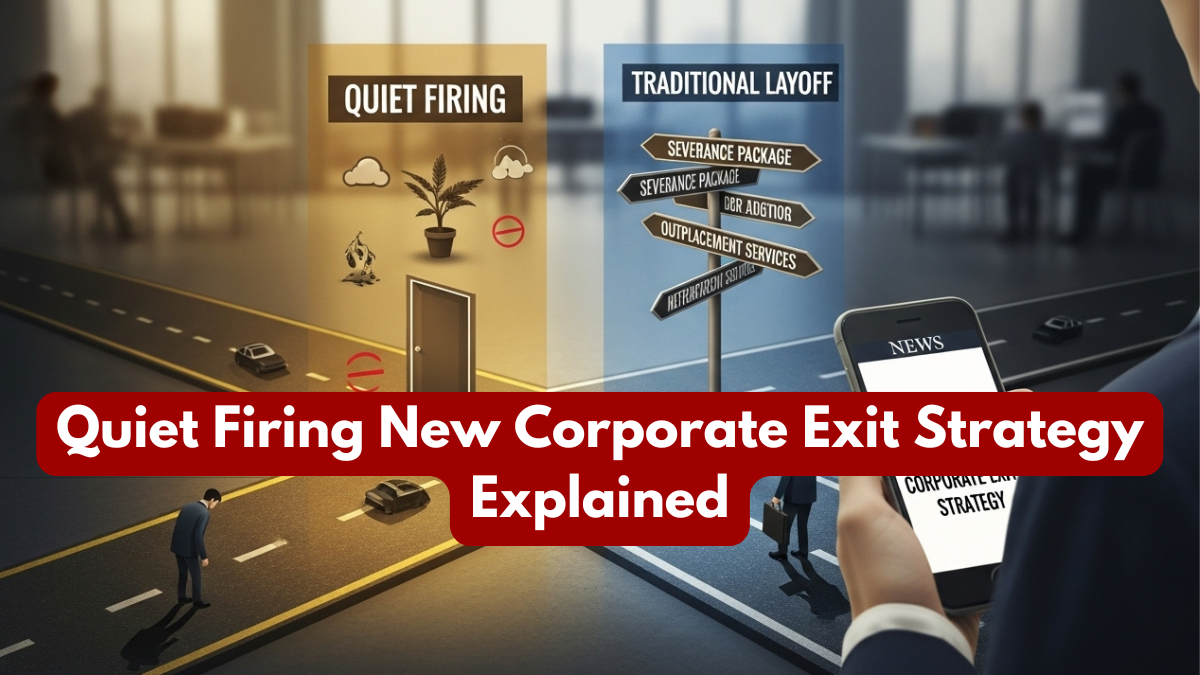
In recent years, quiet firing has emerged as a subtle yet powerful phenomenon reshaping modern organizations. Unlike traditional layoffs or formal performance management, quiet firing involves gradually pushing employees out without explicit termination. This approach has gained traction as companies respond to shifting workplace trends, economic uncertainty, and evolving expectations around flexibility and productivity. For many employees, the experience feels confusing and emotionally draining, while for employers it is often framed as a low-risk HR strategy. Understanding how quiet firing works is essential for navigating today’s professional landscape.
What Quiet Firing Really Means In Today’s Workplace
Quiet firing refers to a pattern of managerial behavior where employees are indirectly encouraged to resign. This may include reduced responsibilities, lack of feedback, exclusion from key projects, or stalled career growth. Instead of addressing performance concerns openly, organizations allow disengagement to do the work for them. Within current workplace trends, this tactic is increasingly visible in remote and hybrid environments where oversight is less transparent. As an HR strategy, quiet firing is often used to avoid legal complications or severance costs, but it can severely damage trust and morale.
Why Companies Are Adopting Quiet Firing As An HR Strategy
Several factors explain the rise of quiet firing. Economic pressure forces organizations to cut costs without triggering public backlash or internal panic. At the same time, evolving workplace trends emphasize agility and constant performance measurement. Managers may feel unequipped to handle difficult conversations, turning instead to passive methods. From an HR strategy perspective, quiet firing is seen as a way to manage workforce size quietly, but it often reflects deeper issues such as weak leadership, unclear expectations, and poor communication culture.
Signs And Tactics Commonly Used In Quiet Firing
Employees experiencing quiet firing often notice consistent patterns rather than single events. These tactics are subtle but cumulative, making them difficult to challenge directly. The table below outlines common signs of quiet firing and their impact on employees within modern workplace trends.
| Quiet Firing Tactic | Description | Employee Impact |
|---|---|---|
| Reduced Workload | Important tasks reassigned | Loss of purpose |
| Limited Feedback | No guidance or recognition | Increased anxiety |
| Exclusion | Left out of meetings or decisions | Isolation |
| Stalled Growth | Promotions and raises withheld | Career stagnation |
| Micromanagement Or Neglect | Extreme control or total absence | Emotional exhaustion |
These behaviors illustrate how quiet firing operates as an unspoken HR strategy rather than a formal process.
Impact Of Quiet Firing On Employees And Workplace Culture
The effects of quiet firing extend far beyond individual exits. Employees subjected to this approach often experience stress, self-doubt, and burnout. Over time, such practices erode psychological safety and amplify negative workplace trends like disengagement and distrust. Teams observing quiet firing may reduce effort, fearing similar treatment. While companies may view it as a convenient HR strategy, the long-term cost includes damaged employer branding, higher turnover, and reduced productivity.
Ethical And Strategic Risks Of Quiet Firing For Organizations
Although quiet firing may appear efficient in the short term, it carries significant ethical and strategic risks. Avoiding honest communication undermines leadership credibility and conflicts with modern expectations of transparency. As workplace trends increasingly prioritize mental health and employee well-being, organizations using quiet firing risk reputational harm. A sustainable HR strategy requires clear feedback, fair processes, and respectful exits rather than silent pressure tactics.
Conclusion
The rise of quiet firing highlights a critical tension in modern employment relationships. While organizations seek flexibility and risk reduction, employees expect honesty and respect. Treating quiet firing as an acceptable HR strategy may offer short-term relief but ultimately weakens workplace culture. As workplace trends continue to evolve, companies that choose transparent performance management over quiet firing will be better positioned to retain talent and build long-term trust.
FAQs
What is quiet firing in simple terms?
Quiet firing is when employers push employees to quit through neglect or reduced opportunities instead of formal termination.
How is quiet firing different from performance management?
Performance management involves clear feedback and goals, while quiet firing avoids direct communication.
Is quiet firing legal?
In many regions it is legal, but it can raise ethical and compliance concerns depending on labor laws and HR strategy practices.
How can employees respond to quiet firing?
Documenting changes, seeking feedback, and having open conversations can help employees address quiet firing situations.
Why is quiet firing becoming more common?
Economic pressure, remote work, and shifting workplace trends have made quiet firing a more common but controversial practice.
Click here to learn more